Your Guide to Borneo’s Famous Orangutan Centre
Deep within the lush rainforests of Malaysian Borneo lies one of the world’s most significant wildlife conservation success stories. The Sepilok Orangutan Rehabilitation Centre, established in 1964, serves as both sanctuary and second chance for orphaned and injured orangutans across Sabah state.
Located just 25 kilometres from Kota Kinabalu, this pioneering facility has successfully rehabilitated hundreds of orangutans over six decades. The centre’s mission extends beyond individual animal care, focusing on species preservation while educating visitors about the critical threats facing these remarkable primates. What began as a small government initiative has evolved into a globally recognised conservation model, inspiring similar projects across Southeast Asia.
What to Expect During Your Visit
Your journey begins at the visitor registration centre, where entrance fees directly support ongoing conservation work. The centre operates on a structured schedule, with feeding times at 10am and 3pm serving as the day’s main attractions.
The feeding platforms represent the heart of the visitor experience. Two elevated wooden structures within the forest provide semi-wild orangutans with supplementary nutrition whilst allowing guests to observe natural behaviours from designated viewing areas. Rangers place fresh fruit and milk on these platforms, though sightings remain unpredictable as rehabilitated orangutans come and go freely throughout the 43-square-kilometre reserve.
The nursery viewing area offers glimpses of younger orangutans still learning essential survival skills. Through large windows, visitors can watch baby orangutans develop climbing abilities and social behaviours under careful supervision. These youngsters typically spend several years in the nursery before graduating to the outdoor facilities.
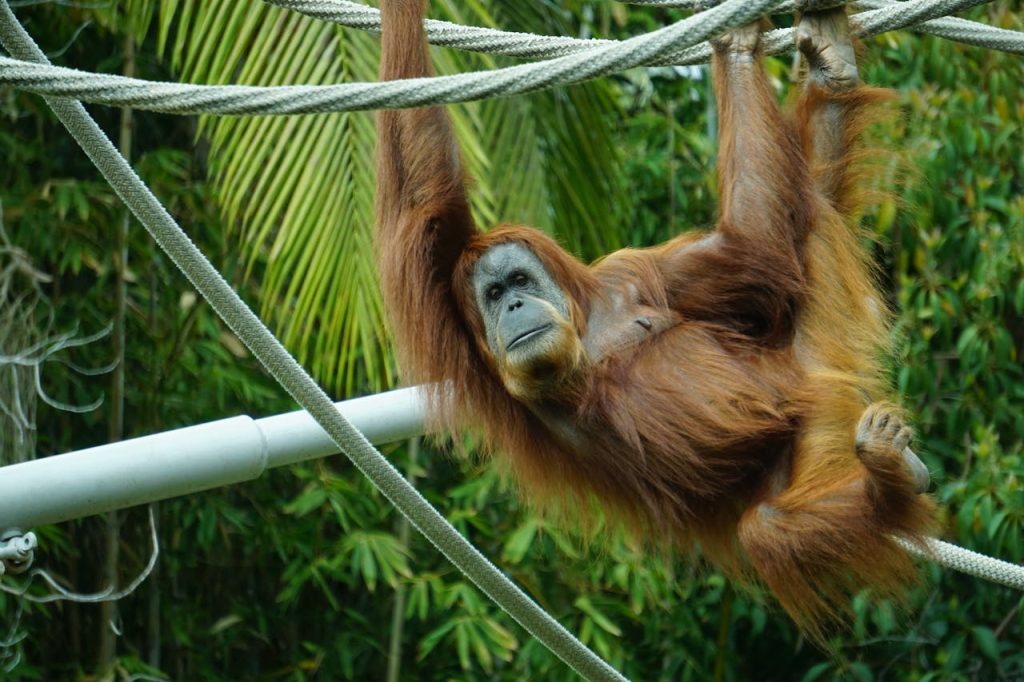
Adjacent outdoor nursery enclosures house adolescent orangutans preparing for forest life. Here, these developing apes practice swinging between branches and foraging for food, building confidence before their eventual release into the wild. The progression from nursery to semi-wild status demonstrates the centre’s methodical approach to rehabilitation.
Visitors can also observe the on-site veterinary clinic, where injured wildlife receives medical treatment. This facility handles everything from routine health checks to complex surgeries, with viewing windows allowing guests to witness conservation medicine in action.
Conservation Impact and Responsible Tourism
The centre’s conservation influence extends far beyond its physical boundaries. Research conducted here has contributed significantly to global understanding of orangutan behaviour, rehabilitation techniques, and forest ecosystem dynamics. Scientists regularly publish findings that inform conservation strategies across Borneo and Sumatra.
Responsible visiting practices enhance both your experience and conservation outcomes. Maintain quiet voices during feeding times, as loud noises can stress the animals. Photography is permitted, though flash photography is strictly prohibited. Keep personal belongings secure, as curious orangutans occasionally grab items from inattentive visitors.
Supporting the centre’s work extends beyond your entrance fee. The on-site gift shop stocks educational materials and locally-made crafts, with proceeds funding ongoing operations. Consider adopting an orangutan through the centre’s programme, which provides regular updates on your chosen individual’s progress.
Supporting Conservation Beyond Your Visit
Your visit to Sepilok represents more than wildlife tourism; it demonstrates tangible conservation impact. Every entrance fee, souvenir purchase, and adoption contribution helps fund rescue operations, medical care, and forest protection efforts across Sabah state.
The centre’s success depends on continued public support and awareness. Share your experience with others, highlighting both the wonder of seeing orangutans up close and the urgent need for habitat protection. Consider supporting palm oil alternatives in your daily life, as plantation expansion remains the primary threat to wild orangutan populations.
Sepilok proves that conservation and education can work hand in hand, creating positive outcomes for wildlife whilst inspiring visitors to become conservation advocates. Your visit contributes to a legacy of protection that has already secured the future for hundreds of orangutans and will continue safeguarding these extraordinary animals for generations to come.
Stay in touch to get more updates & news on Washington Greek!